Introduction
How Much of Our Daily Life Happens Online?
The internet has become a regular part of our everyday lives. Many activities that once required us to visit a store, bank, office, or classroom can now be done online within a few minutes. We use the internet to communicate with friends and family, attend classes and meetings, shop for products, order food, book tickets, pay bills, and manage our finances.
Our smartphones have made this even more common. Social media, messaging apps, streaming platforms, online banking, and digital payment services are now part of our daily routines. Even simple activities such as checking the weather, finding directions, reading the news, or searching for information usually involve the internet.
As more of our personal, financial, educational, and professional activities move online, we are also sharing and storing more information digitally. This makes the internet extremely useful, but it also means that protecting our online accounts, devices, and personal information has become an important part of everyday life.
Why Cybersecurity Is No Longer Only a Concern for Big Companies
Cybersecurity was once often associated with large companies, banks, and government organizations that handled huge amounts of sensitive information. However, this has changed as more people now use digital services in their everyday lives. Individuals and small businesses also store valuable information online, making them potential targets for cybercriminals.
A person may have personal photos, emails, social media accounts, online banking details, and other private information stored across different platforms. A small business may also keep customer information, payment details, employee records, and important business files digitally. If these accounts or systems are compromised, the consequences can include financial loss, stolen information, or loss of access to important data.
Cyber threats can also affect people through simple methods such as fake emails, suspicious links, fraudulent websites, and malicious downloads. These attacks do not always require sophisticated technology; sometimes, they rely on people making a quick mistake.
For this reason, cybersecurity is now a concern for everyone who uses the internet. Basic security habits, such as using strong passwords, enabling two-factor authentication, keeping software updated, and being careful with unknown links, can help reduce common online risks.
What Is Cybersecurity?
Cybersecurity refers to the methods and practices used to protect computers, smartphones, networks, applications and digital information from unauthorized access, damage, or theft. In simple terms, it is about keeping our digital lives safe from online threats.
Whenever we use the internet, we create and share information. This can include passwords, personal details, photos, messages, financial information, and other sensitive data. Cybersecurity helps protect this information and prevents unauthorized people from gaining access to it.
Cybersecurity is not just about installing antivirus software or using complicated security systems. It also includes the everyday choices we make while using technology. Creating strong passwords, enabling two-factor authentication, keeping devices updated, and avoiding suspicious links are all basic cybersecurity practices.
For businesses, cybersecurity can involve more advanced measures such as network security, data encryption, access controls, security monitoring, and regular backups. These measures help protect important business information and reduce the risk of cyberattacks.
Overall, cybersecurity plays an important role in making our digital activities safer. Whether someone is using a smartphone for personal communication or managing a business online, basic cybersecurity awareness can help protect their information and digital accounts.
What Does Cybersecurity Protect?
Cybersecurity protects more than just computers and networks. It helps protect the information, accounts, devices, and digital services that people and organizations rely on every day.
1. Personal Information
Cybersecurity helps protect information such as names, addresses, phone numbers, email addresses, passwords, and other personal details from being accessed or misused without permission.
2. Financial Information
Online banking accounts, credit and debit card details, and digital payment information can be valuable targets for cybercriminals. Security measures help reduce the risk of financial information being stolen or misused.
3. Online Accounts
Email, social media, shopping, and other online accounts can contain private information. Strong passwords and additional security measures can help prevent unauthorized access.
4. Devices
Computers, smartphones, tablets, and other connected devices can be affected by malware and other threats. Cybersecurity helps protect these devices and the information stored on them.
5. Business Data
Businesses often store customer information, financial records, employee details, and important files digitally. Cybersecurity helps protect this data from unauthorized access, loss, or damage.
6. Privacy
Cybersecurity also plays an important role in protecting people’s digital privacy. By securing accounts, devices, and networks, it can help prevent unauthorized people from accessing private conversations, files, photos, and other personal information.
7. Reputation
A cybersecurity incident can also affect a person’s or organization’s reputation. For businesses, a data breach or compromised customer information may reduce customers’ trust. Individuals can also face problems if their social media or other online accounts are hacked and used to post or share content without their permission. Good cybersecurity practices can help reduce these risks and protect digital trust.
In short, cybersecurity helps protect the digital information, systems, privacy, and reputation that have become an important part of modern life.
Common Cybersecurity Threats
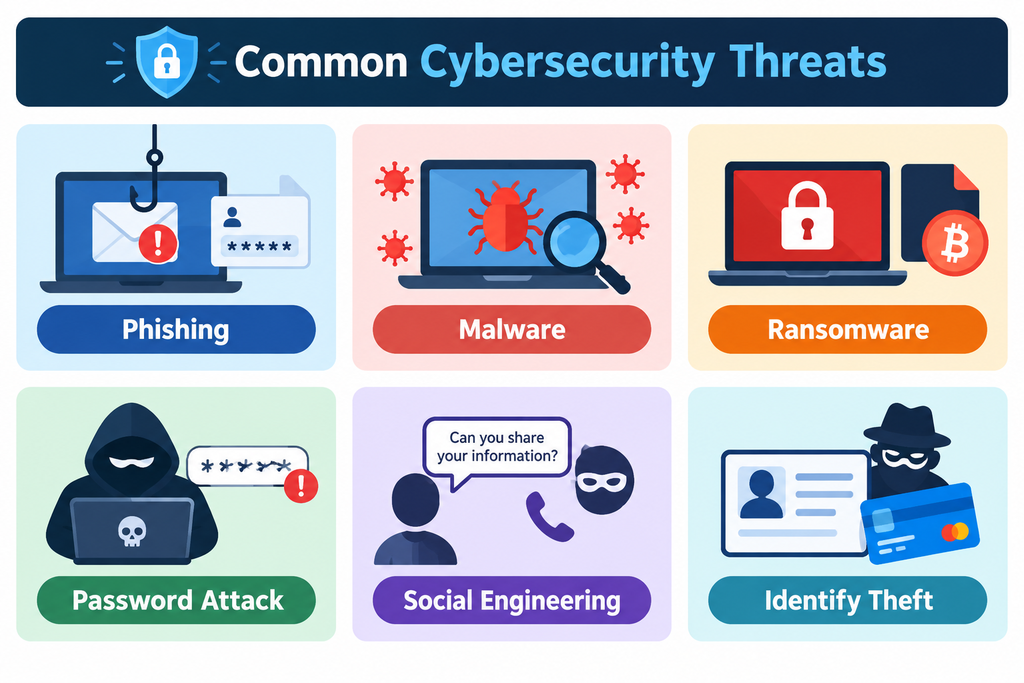
As more people and businesses use the internet for everyday activities, cyber threats have also become more common. Cybercriminals use different techniques to steal information, gain unauthorized access to accounts, damage devices, or trick people into sharing sensitive details.
1. Phishing
Phishing is a type of online scam in which attackers try to trick people into providing sensitive information. They may send fake emails, text messages, or create websites that look like they belong to legitimate companies or services.
2. Malware
Malware, short for malicious software, is software designed to harm a device, steal information, or gain unauthorized access to a system. Viruses, spyware, trojans, and worms are examples of malware.
Malware can enter a device through malicious downloads, infected files, unsafe websites, or suspicious email attachments. Once installed, it may cause problems such as data loss, unauthorized access, or reduced device performance.
3. Ransomware
Ransomware is a type of malware that can prevent users from accessing their files or systems. Attackers may encrypt important files and demand a payment in exchange for restoring access.
Ransomware can affect individuals as well as businesses. Losing access to important personal or business files can cause significant disruption, which is why regular backups and good security practices are important.
4. Password Attacks
Passwords are one of the most common ways people protect their online accounts, but weak or reused passwords can make accounts easier to compromise.
In password attacks, cybercriminals may try to guess passwords, use stolen credentials, or repeatedly attempt different password combinations. Using strong and unique passwords for different accounts can reduce this risk. Enabling two-factor authentication can provide an additional layer of protection.
5. Social Engineering
Social engineering involves manipulating or deceiving people into revealing information or performing an action that could compromise their security. Instead of attacking a computer directly, attackers may target human behavior.
For example, someone might pretend to be a bank employee, company representative, or technical support agent and ask for a password or verification code. Being cautious about unexpected requests for sensitive information can help prevent these attacks.
6. Identity Theft
Identity theft occurs when someone obtains and uses another person’s personal information without permission, often for fraudulent purposes. Stolen information may include names, account details, identification information, or financial data.
Identity theft can lead to unauthorized transactions, fraudulent accounts, or other financial and personal problems. Protecting personal information and monitoring important accounts can help reduce the risk.
Understanding these common cybersecurity threats is an important first step toward staying safe online. Recognizing suspicious messages, protecting account credentials, and being careful about what information is shared can help people avoid many common risks.
How Cyberattacks Can Affect Individuals
Cyberattacks can affect anyone who uses the internet, regardless of their age or level of technical knowledge. A successful attack can cause more than just problems with a device. It can lead to financial losses, stolen information, compromised accounts, and privacy concerns.
1. Financial Loss
Cyberattacks can result in direct or indirect financial loss. For example, criminals may gain access to online banking or payment information and use it for unauthorized transactions. People can also lose money by falling for online scams, fake shopping websites, or fraudulent messages.
2. Account Takeover
An account takeover happens when someone gains unauthorized access to another person’s online account. Attackers may obtain passwords through phishing, data breaches, or other methods. Once inside an account, they may change the password, access private information, or use the account to target other people.
Email and social media accounts can be particularly important because they may be connected to other online services. Losing access to one account can sometimes create problems with several connected accounts.
3. Data Theft
Personal data is valuable and cybercriminals may try to steal information such as names, passwords, financial details, photos, documents or other sensitive files. Stolen data can potentially be misused or shared without the person’s permission.
Data theft can also affect businesses and organizations when customer or employee information is exposed during a cyber incident.
4. Privacy Problems
A cyberattack can expose information that people expect to remain private. Hackers who gain access to an account or device may be able to view private messages, photos, documents, browsing information, or other personal data.
Privacy problems can continue even after an attack if stolen information is shared or misused. This is why protecting accounts and devices is an important part of maintaining digital privacy.
Overall, cyberattacks can have financial, personal, and privacy-related consequences. Understanding these risks can help individuals take simple precautions to protect themselves while using digital services.
Simple Ways to Stay Safe Online
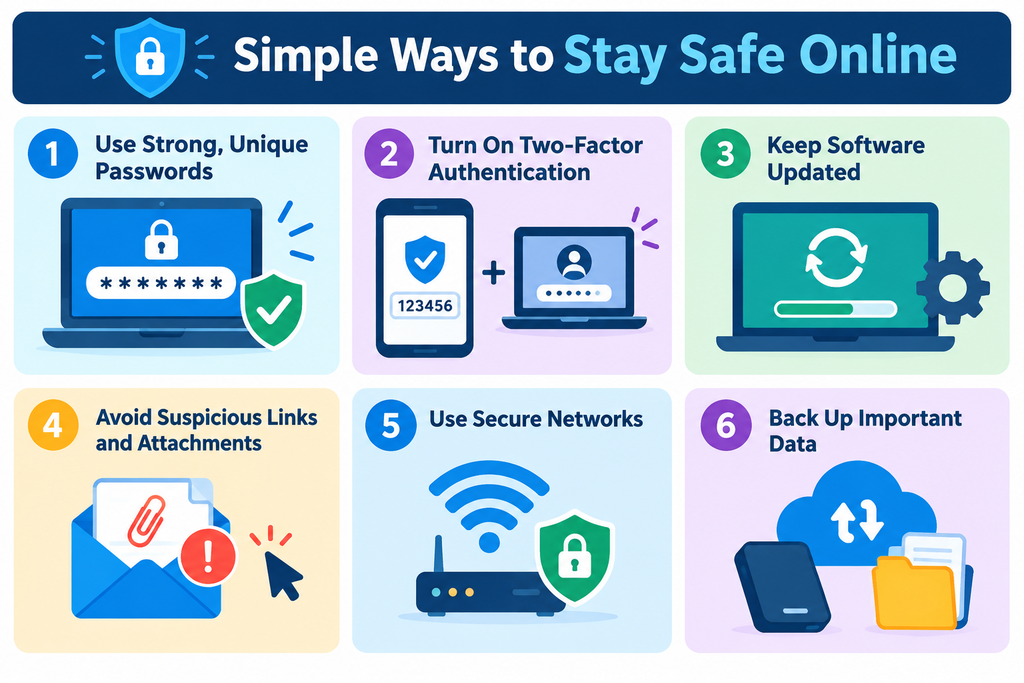
Staying safe online does not always require advanced technical knowledge. A few simple security habits can help reduce common risks and protect personal information, accounts, and devices.
1. Use Strong, Unique Passwords
Use long and difficult-to-guess passwords for your online accounts. Avoid using easily available information such as your name, birthday, or phone number. It is also important to use a different password for each important account. If one password is compromised, unique passwords can help prevent attackers from accessing other accounts.
2. Turn On Two-Factor Authentication
Two-factor authentication (2FA) adds an extra layer of security to an account. In addition to entering a password, you may need to verify your identity using a code, authentication app, security key, or another method. Even if someone obtains your password, 2FA can make unauthorized access more difficult.
3. Keep Software Updated
Keep your operating system, applications, web browsers, and security software updated. Software updates often include security fixes for known vulnerabilities. Delaying updates can leave devices exposed to threats that could have been addressed by newer versions.
4. Avoid Suspicious Links and Attachments
Be careful when clicking links or opening attachments in unexpected emails, text messages, or social media messages. Attackers may use fake messages to direct people to malicious websites or trick them into downloading harmful files. If a message seems unusual, verify the sender through a trusted method before taking action.
5. Use Secure Networks
Avoid entering sensitive information when using unsecured or unknown public Wi-Fi networks. When possible, use a trusted network or mobile data connection for activities such as online banking. Make sure your home Wi-Fi network is protected with a strong password and updated security settings.
6. Back Up Important Data
Regularly back up important files such as documents, photos, and other personal data. Backups can be useful if a device is lost, damaged, or affected by malware or ransomware. Keep backups in a secure location and, for particularly important information, consider maintaining more than one backup.
By following these basic practices, individuals can reduce many common online security risks. Good cybersecurity starts with small, consistent habits that help protect your digital information every day.
Cybersecurity for Businesses
Cybersecurity is important for businesses of all sizes. Companies rely on digital systems to store information, communicate with customers, process payments, and manage daily operations. A security incident can therefore affect not only a company’s data but also its employees, customers, operations, and reputation.
1. Protecting Customer Data
Businesses often collect and store customer information such as names, contact details, payment information, and account data. Protecting this information is important because unauthorized access or data breaches can expose sensitive customer details. Strong security measures can help businesses reduce the risk of data being stolen or misused.
2. Employee Security
Employees can play an important role in a company’s cybersecurity. Weak passwords, suspicious links, unsafe downloads, or accidentally sharing sensitive information can create security risks. Businesses can reduce these risks by providing cybersecurity awareness training, using strong access controls, and encouraging employees to follow safe online practices.
3. Business Continuity
A cyberattack can interrupt normal business operations. For example, ransomware or a system breach may prevent employees from accessing important files or services. Regular data backups, security procedures, and recovery plans can help businesses restore their systems and continue operating after a security incident.
4. Reputation
A cybersecurity incident can also affect a company’s reputation. Customers may lose trust if their personal information is exposed or if a business is unable to protect its systems. Maintaining good cybersecurity practices can help businesses protect customer confidence and demonstrate that they take data security seriously.
Overall, cybersecurity is an important part of running a modern business. Protecting data, securing employees, preparing for disruptions, and maintaining customer trust can help businesses operate more safely in an increasingly digital environment.
The Role of Cybersecurity in the Future
Technology is becoming more deeply connected to everyday life, and this is likely to make cybersecurity even more important in the future. As people, businesses, and organizations depend on digital services for more activities, protecting digital systems and information will become an ongoing priority.
1. Increasing Digital Dependence
People are increasingly using digital platforms for communication, shopping, banking, education, entertainment, and work. Businesses are also relying on online systems to manage their operations and interact with customers. As this dependence grows, protecting digital accounts, information, and services will become increasingly important.
2. More Connected Devices
The number of internet-connected devices is also growing. Smartphones, smart TVs, watches, home security systems, vehicles, and other connected devices can collect and exchange information online. While these technologies offer convenience, each connected device can also introduce additional security considerations. Keeping devices updated and properly secured will therefore become increasingly important.
3. Need for Better Security Awareness
Technology alone cannot prevent every cyber threat. People also need to understand common risks and know how to use digital services safely. Learning how to recognize suspicious messages, protect passwords, use additional security measures, and handle personal information carefully can help reduce avoidable security risks.
As technology continues to evolve, cybersecurity will need to evolve with it. Better technology, stronger security practices, and greater awareness can all contribute to a safer digital environment.
Conclusion
Cybersecurity has become an important part of everyday life as more of our personal, financial, and professional activities move online. From protecting personal information and online accounts to securing business data, good cybersecurity practices can help reduce the risks associated with digital threats.
Online Safety Is a Shared Responsibility
Online safety is not only the responsibility of technology companies, banks, or cybersecurity professionals. Individuals and businesses also have an important role to play. Being careful about the information we share, the links we click, and the accounts we access can make a meaningful difference.
Small Security Habits Can Reduce Common Risks
Staying safe online does not always require complicated technical knowledge. Using strong and unique passwords, enabling two-factor authentication, keeping software updated, avoiding suspicious links, and backing up important data are simple habits that can help protect against common threats.
As our dependence on technology continues to grow, cybersecurity awareness will become increasingly important. By developing good security habits and using digital services responsibly, we can make our online experiences safer and more secure.