Introduction
E-commerce means buying and selling products or services through the internet. It allows businesses to sell their products through websites, mobile apps, and online marketplaces. Customers can choose products, place orders, and make payments online without visiting a physical store.
Online shopping has become common because it is simple and convenient. People can shop from home using a smartphone or computer. They can also compare products, check prices, read reviews, and place orders at any time. This saves time and makes shopping easier for customers.
Businesses are moving online because customer shopping habits are changing. An online store allows businesses to reach more customers beyond their local area. It also gives them a way to display their products, communicate with customers, and sell their products through digital platforms. As more people use the internet for shopping, having an online presence has become important for many businesses.
What Is E-Commerce?
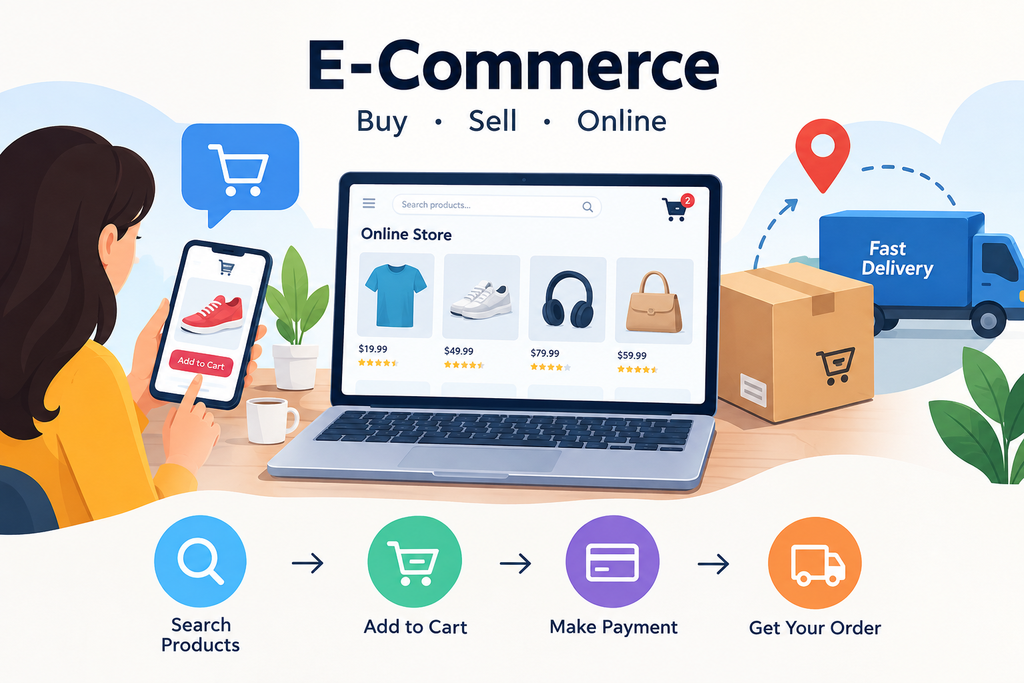
E-commerce, short for electronic commerce, refers to buying and selling products or services through the internet. Instead of visiting a physical store, customers can use websites, mobile apps, or online marketplaces to find products and place orders.
E-commerce includes different types of online activities, such as buying products, selling services, making digital payments, and ordering products online. For example, when a customer purchases clothes from an online store or orders a product through a shopping app, it is an example of e-commerce.
E-commerce connects businesses and customers through digital platforms. Businesses can display their products online, provide information about them, receive orders, and communicate with customers. Customers can browse different options and purchase products from wherever they have internet access.
Today, e-commerce is an important part of modern business because it provides businesses with an online way to sell their products and gives customers a convenient way to shop.
How E-Commerce Helps Businesses Grow
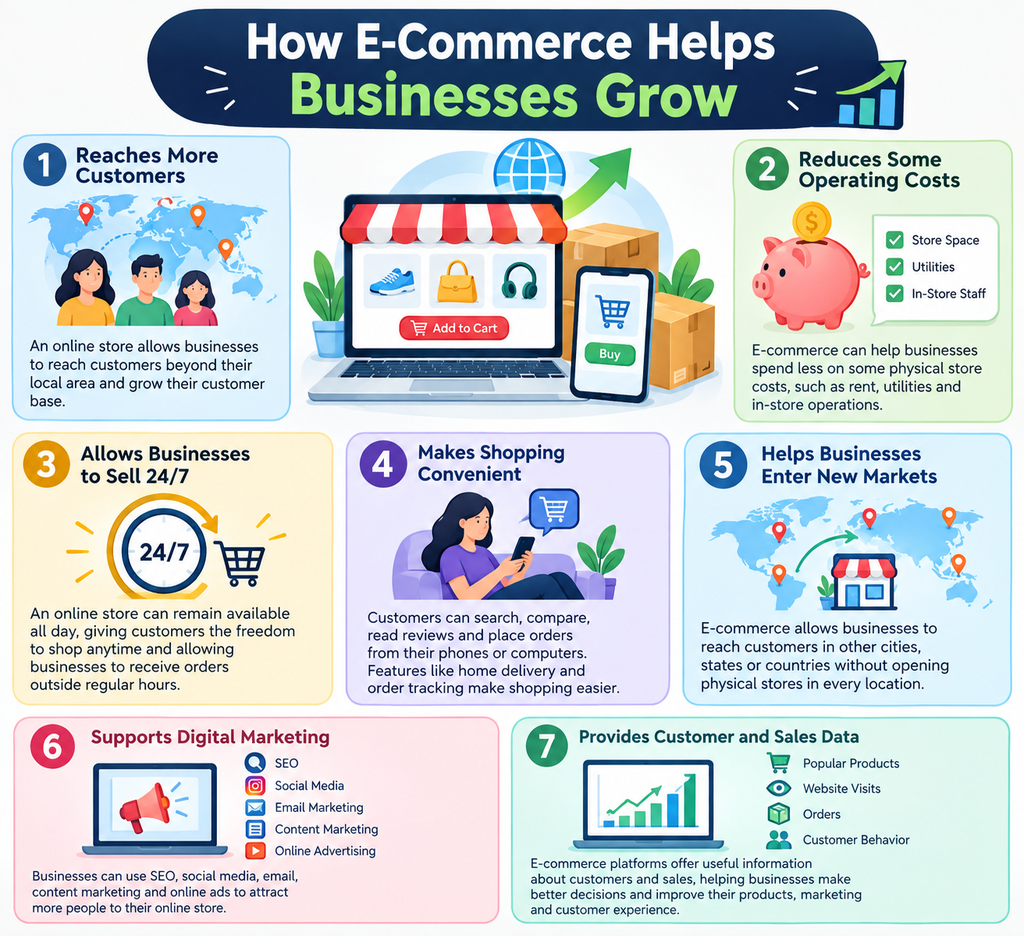
E-commerce has created new opportunities for businesses to grow in the digital world. It allows businesses to reach customers online, sell products more easily, and understand customer behavior. Here are some important ways e-commerce can support business growth.
1. Reaches More Customers
E-commerce has created new opportunities for businesses to grow in the digital world. It allows businesses to reach customers online, sell products more easily, and understand customer behavior. Here are some important ways e-commerce can support business growth.
2. Reduces Some Operating Costs
E-commerce can help businesses reduce some of the costs associated with running a physical store. Businesses may spend less on expenses such as store space, utilities, and some in-store operations.
However, online businesses still have costs related to website maintenance, marketing, packaging, delivery, technology, and customer service. E-commerce does not remove business costs, but it can provide a different and sometimes more flexible way of managing them.
3. Allows Businesses to Sell 24/7
An online store can remain available throughout the day. Customers can browse products and place orders at any time without waiting for a physical store to open.
This gives customers more flexibility and allows businesses to receive orders outside traditional business hours. Automated systems can also handle tasks such as order confirmations and payment processing.
4. Makes Shopping Convenient
E-commerce makes shopping easier for customers. They can search for products, compare prices, read reviews, and place orders using a smartphone or computer.
Customers do not always need to travel to a store or spend time waiting in queues. Features such as home delivery and order tracking can make the overall shopping experience more convenient.
5. Helps Businesses Enter New Markets
E-commerce can help businesses expand into new geographical markets. A business that previously served only local customers can use online platforms to reach customers in other cities, states, or countries, depending on its delivery and business capabilities.
This can give businesses opportunities to introduce their products to new audiences without immediately opening physical stores in every location.
6. Supports Digital Marketing
E-commerce works closely with digital marketing. Businesses can use SEO, social media marketing, email marketing, content marketing, and online advertising to attract people to their online stores.
For example, a business can share product videos on social media or publish helpful articles related to its products. These activities can help people discover the business and visit its online store.
7. Provides Customer and Sales Data
E-commerce platforms can provide businesses with useful information about customer activity and sales. Businesses can analyze information such as popular products, website visits, orders, and customer interactions.
This information can help businesses understand what customers are interested in and identify areas that may need improvement. Businesses can use these insights to make more informed decisions about products, marketing, and customer experience.
Conclusion of This Section
E-commerce can support business growth by expanding customer reach, providing convenient shopping, supporting digital marketing, and giving businesses useful information about customers and sales. When businesses use these opportunities effectively, an online store can become an important part of their overall business strategy.
How E-Commerce Helps Small Businesses
E-commerce has created new opportunities for small businesses to reach customers and grow their business. A small business does not always need a large physical store to sell its products. With an online store, it can present its products to a wider audience and connect with customers through digital platforms.
1. Reaches Customers Beyond the Local Area
A small business can use an online store to sell products to customers outside its local area. Instead of depending only on people who live nearby, the business can receive orders from different cities or regions, depending on its delivery options.
2. Provides a Low-Barrier Way to Start Selling Online
E-commerce platforms give small businesses different ways to start selling online. Businesses can use their own website or sell through established online marketplaces. This allows them to choose an approach based on their products, budget, and business needs.
3. Helps Build a Brand
An online presence gives small businesses a place to showcase their products and communicate their identity. Businesses can use their website, social media pages, product images, and content to introduce their brand to potential customers.
4. Supports Digital Marketing
Small businesses can use digital marketing to promote their products without depending only on traditional advertising. Social media, SEO, email marketing, content marketing, and online advertising can help businesses reach potential customers.
5. Makes Customer Communication Easier
Online platforms provide different ways for small businesses to communicate with customers. Customers can ask questions through messages, emails, or website contact forms. Businesses can also share updates about products, orders, and offers.
6. Helps Understand Customer Needs
E-commerce can provide useful information about customer interests and buying behavior. Small businesses can look at product views, orders, customer feedback, and other information to understand what their customers prefer.
7. Creates Opportunities for Business Growth
As a small business gains customers online, it can explore new products, markets, and marketing strategies. E-commerce does not guarantee success, but it can give small businesses additional opportunities to grow and compete in the digital marketplace.
Conclusion
E-commerce can be a useful tool for small businesses because it helps them reach wider audiences, build their brand, communicate with customers, and support digital marketing. With a clear strategy and focus on customer needs, an online presence can become an important part of a small business’s growth.
The Role of Digital Marketing in E-Commerce
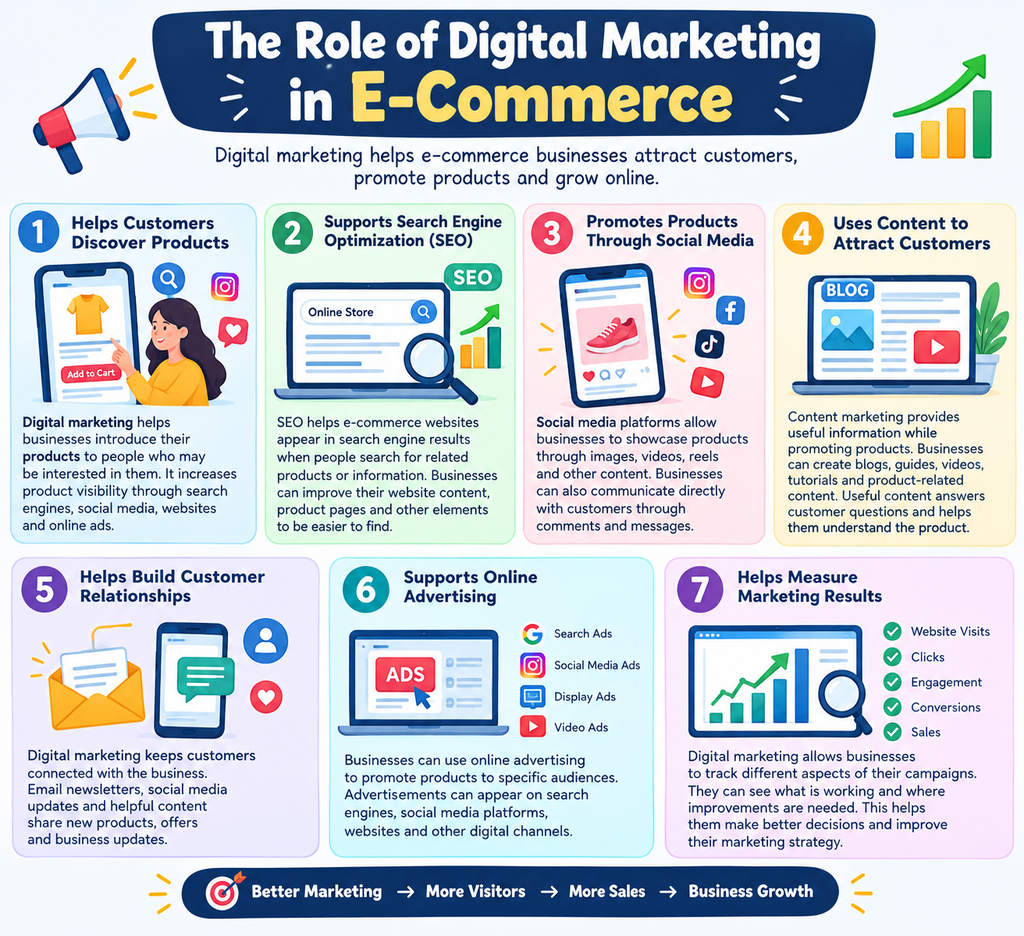
Digital marketing plays an important role in e-commerce because it helps businesses promote their products and reach potential customers online. Having an online store is not always enough. Businesses also need ways to bring people to their website or online store and encourage them to explore their products.
1. Helps Customers Discover Products
Digital marketing helps businesses introduce their products to people who may be interested in them. Businesses can use search engines, social media, websites, and online advertisements to increase product visibility.
2. Supports Search Engine Optimization (SEO)
SEO helps e-commerce websites appear in search engine results when people search for related products or information. Businesses can improve their product pages, website content, and other elements to make their online store easier to discover through search engines.
3. Promotes Products Through Social Media
Social media platforms allow businesses to showcase products through images, videos, reels, and other content. Businesses can also communicate directly with customers through comments and messages.
For example, an online clothing store can share product photos, styling ideas, new arrivals, and customer reviews on social media.
4. Uses Content to Attract Customers
Content marketing can help e-commerce businesses provide useful information while promoting their products. Businesses can create blogs, guides, videos, tutorials, and product-related content.
Useful content can answer customer questions and help people understand how a product can meet their needs.
5. Helps Build Customer Relationships
Digital marketing is not only about selling products. It can also help businesses stay connected with customers. Email newsletters, social media updates, and useful content can keep customers informed about new products, offers, and business updates.
6. Supports Online Advertising
Businesses can use online advertising to promote products to specific audiences. Advertisements can appear on search engines, social media platforms, websites, and other digital channels.
Businesses can use advertising campaigns to promote new products, special offers, or important business updates.
7. Helps Measure Marketing Results
One important advantage of digital marketing is that businesses can measure different aspects of their campaigns. They can track website visits, clicks, engagement, conversions, and sales.
This information can help businesses understand which marketing activities are working and where improvements may be needed.
Conclusion
Digital marketing helps e-commerce businesses attract customers, promote products, build relationships, and measure marketing performance. When digital marketing is combined with a useful product and a good customer experience, it can become an important part of an e-commerce business strategy.
Challenges of Running an E-Commerce Business
E-commerce provides many opportunities for businesses, but running an online business also comes with different challenges. Businesses need to manage competition, build customer trust, handle deliveries, protect online information, and manage returns properly.
1. Competition
Competition is one of the common challenges in e-commerce. Customers can compare products, prices, reviews, and different sellers online before making a purchase.
Because customers have many choices, businesses need to focus on product quality, customer service, pricing, and a good online shopping experience to attract and retain customers.
2. Customer Trust
Building customer trust can be difficult, especially for a new online business. Customers may want to know whether the business is genuine, whether the product information is accurate, and whether their payment and personal information will be handled safely.
Clear product descriptions, genuine customer reviews, secure payment options, and transparent business policies can help create trust.
3. Delivery and Logistics
Managing delivery and logistics can be challenging for e-commerce businesses. Businesses need to make sure that products are properly packed and delivered to customers on time.
Issues such as shipping delays, damaged products, incorrect addresses, and delivery costs can affect the customer experience. Businesses need reliable delivery processes to manage these problems effectively.
4. Online Security
Online businesses handle important information such as customer names, contact details, addresses, and payment-related information. Protecting this information is an important responsibility.
Businesses need to use appropriate security measures, keep their systems updated, and protect customer accounts and business data from online threats.
5. Returns and Refunds
Returns and refunds can be another challenge for online businesses. Customers may want to return a product because of its size, quality, damage, or because it does not meet their expectations.
Businesses need clear return and refund policies so customers understand the process. Handling returns efficiently can also help provide a better customer experience.
Conclusion
Running an e-commerce business requires more than simply selling products online. Businesses need to manage competition, customer trust, delivery, security, and returns while maintaining a good customer experience. Understanding these challenges can help businesses prepare better and build a more reliable online store.
Tips for Building a Strong E-Commerce Business
Building a strong e-commerce business requires more than just putting products online. Businesses need to understand their customers, provide a smooth shopping experience, and maintain good communication. The following tips can help businesses build a reliable online presence.
1. Understand Your Target Customers
Before selling products online, businesses should understand who their target customers are. Knowing their needs, interests, preferences, and buying habits can help businesses offer products that are relevant to them.
2. Create a User-Friendly Website
An e-commerce website should be simple and easy to navigate. Customers should be able to find products, check information, add items to their cart, and complete their purchases without unnecessary difficulty.
A website should also work well on smartphones because many customers browse and shop using mobile devices.
3. Provide Clear Product Information
Customers cannot physically examine products when shopping online. Clear product descriptions, accurate specifications, good-quality images, prices, sizes, and other important details can help customers understand what they are buying.
4. Offer a Smooth Checkout Process
A complicated checkout process can make customers leave without completing their purchase. Businesses should keep checkout simple and clearly display information about payment, delivery, and order details.
5. Focus on Customer Service
Good customer service can help businesses build long-term relationships with customers. Businesses should respond to questions, handle complaints professionally, and provide clear information about orders and deliveries.
6. Use Digital Marketing
Businesses can use SEO, social media, email marketing, content marketing, and online advertising to promote their products. A consistent digital marketing strategy can help more people discover the online store.
7. Protect Customer Information
Security is important for every e-commerce business. Businesses should take appropriate steps to protect customer accounts, personal information, and payment-related data.
Keeping software updated and using secure systems can help reduce common online security risks.
8. Listen to Customer Feedback
Customer feedback can help businesses understand what they are doing well and where improvements are needed. Reviews, ratings, questions, and complaints can provide useful information for improving products and services.